Bridal Style
Bridal Style Guide: How to Create a Wedding Look That Feels Like You
Choose wedding clothing around movement, fabric, venue, weather, alterations, and the details you actually enjoy wearing.
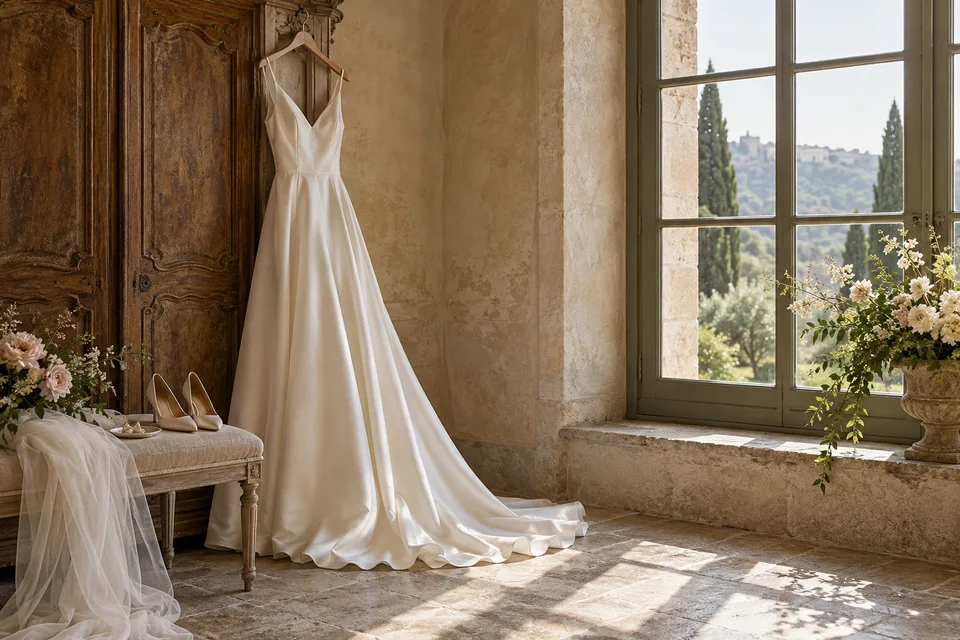
A wedding look feels like you when it supports both your taste and your day. Start with how you want to move, the setting, and the level of formality. Then try silhouettes and fabrics with those needs in mind. A beautiful outfit should let you sit, walk, eat, greet people, and enjoy the celebration.
“Bridal style” can include gowns, suits, jumpsuits, separates, and cultural dress. Use the label only if it suits you. There is no requirement to transform into a different kind of person to look dressed for your wedding.
Before leaving the final fitting, ask how to handle a loose fastening or a bustle that comes undone. A helper should know the intended attachment points. Pack any small repair items recommended by your fitter, and avoid improvised fixes that could damage delicate fabric or restrict movement.
Make a wearing brief before a mood board
Write five practical facts: indoor or outdoor, likely weather, walking surfaces, ceremony requirements, and the activities you want to do. A garden path, a long staircase, or a seated meal can affect a clothing decision as much as a neckline.
Add a few feeling words, such as relaxed, structured, understated, or playful. Then identify clothes you already enjoy wearing and why. Perhaps you like a defined waist, soft sleeves, or tailoring that stays in place. Those preferences are better starting clues than a list of trends.
Try silhouettes as experiments
Bring a small number of references to an appointment, then allow room to test something different. An A-line skirt, a close-fitting column, a full skirt, and tailored separates distribute fabric differently. Avoid treating a body-shape chart as a rule about what you are allowed to wear.
Look at the side and back as well as the front. Walk several steps, sit in a chair, lift your arms, and turn. Ask permission before photographing samples, and judge them with an awareness that clips and sample sizing can disguise how a finished garment will fit.
Fabric changes the whole experience
A silhouette in soft fabric can feel very different from the same outline in a stiffer textile. Ask to feel the garment's weight and inner construction. A lighter-looking dress can still have substantial layers, while a simple tailored outfit may need careful support or lining.
| Quality | Try this | Why it matters |
|---|---|---|
| Movement | Walk and sit in the outfit | Fabric must support the activities planned |
| Weight | Wear the sample for more than a moment | Long celebrations can make weight noticeable |
| Texture | Check areas touching skin | Seams, beads, or lace may feel irritating |
| Opacity | View in strong light | Underlayers may be visible |
| Care | Ask about steaming and storage | Preparation requirements affect the final schedule |
Follow the maker's care instructions rather than guessing. Some finishes do not tolerate the same heat, steam, or cleaning methods as others. Ask who will prepare the garment and how it should travel to the venue.
Set the complete clothing budget
Include alterations, underlayers, shoes, accessories, cleaning if desired, and any travel or appointment charges. A sample sale purchase may need substantial adjustment. Ask an alterations specialist what is feasible before buying a garment that needs structural changes.
Clarify purchase terms, delivery estimates, and what happens if a garment arrives with an issue. Keep the order details in writing. Do not plan major changes based only on a salesperson's reassurance if the person doing the alterations has not assessed the actual garment.
Use fittings to solve specific problems
Bring the shoes and underlayers you intend to wear, following your fitter's advice. A change in heel height can affect the hem. Ask about sitting, arm movement, fastening, and any train or bustle arrangement. If someone will help you dress, have them learn the process before the wedding morning.
Keep notes of agreed changes and the next appointment. Do not wait until collection to mention discomfort. Avoid pressure to change your body to fit an outfit; discuss adjustments that support your comfort and real measurements with the professional doing the work.
Choose accessories with a clear purpose
Try jewelry, a veil, a hairpiece, or a jacket one at a time. Each addition changes the balance. A neckline or detailed fabric may already provide enough interest. Sentimental items can be incorporated quietly rather than worn all at once.
Test hair accessories for secure placement and weight. If you plan to remove a veil after the ceremony, practice doing so without disturbing the hairstyle. Keep small items together in a labeled container and decide who will look after them during the reception.
Plan for the actual weather and floor
A wrap, jacket, umbrella, or change of shoes can support the look rather than spoil it. Check whether a long hem will cross gravel, grass, or wet pavement. Ask the venue about sheltered routes and a suitable place to get dressed.
Wear shoes on a safe indoor surface before the day to check pressure points and stability. Confirm that both your main shoes and any backup work with the hem. A second pair is useful only if you can walk safely without catching the fabric.
Decide how much company you want
A small appointment group can make it easier to hear your own response. Tell companions what kind of feedback helps: comfort, movement, and whether the outfit feels like you. Comments about bodies or pressure to choose a particular style do not help a practical decision.
If family expectations involve cultural dress, talk about the meaning and options directly. You may choose one outfit, a change between events, or a detail that honors the tradition. Our wedding traditions guide offers a respectful framework for that conversation.
Prepare a simple dressing plan
- Follow storage and preparation instructions.
- Lay out every piece, including fastenings and underlayers.
- Allow a realistic dressing window in the schedule.
- Give a helper the fastening or bustle instructions.
- Pack comfortable backup essentials that suit your outfit.
Stop adding details once the look supports the day and feels right to you. Coordinate the wider atmosphere with our color palette ideas, then give yourself permission to enjoy the clothing you chose.
Published by Anna’s Weddings Editorial. Examples are illustrative; planning suggestions should be adapted to your location, venue, and circumstances. Read our editorial standards.